Immigration Applicant Preferences
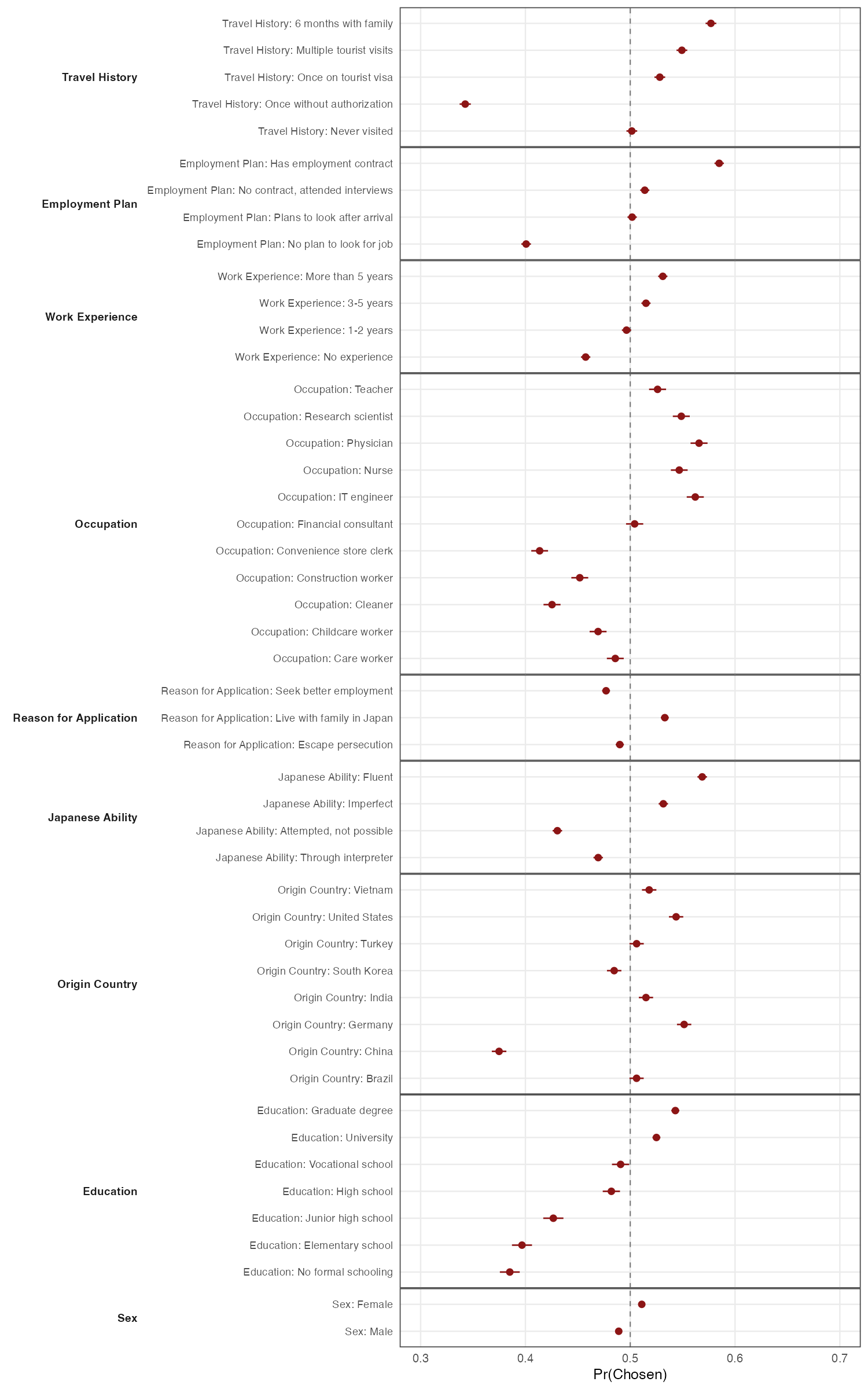
Respondents evaluated pairs of hypothetical immigration applicants described along nine attributes and chose which applicant they would prefer Japan admit. Results are reported as marginal means (Pr(chosen) with 95% CIs).
Wave 2026 February
Results
課題(日本語): 仮想の移民申請者のペアを評価し、どちらの申請者を日本が受け入れることを望むかを選んでください。
Task (English): Respondents evaluated pairs of hypothetical immigration applicants and chose which applicant they would prefer Japan to admit.
| 属性 (Attribute) | 選択肢(日本語) | Levels (English) |
|---|---|---|
| 性別 (Sex) | 男性; 女性 | Male; Female |
| 学歴 (Education) | 正規の学校教育なし; 日本の小学校卒業に相当; 日本の中学校卒業に相当; 日本の高等学校卒業に相当; 日本の専門学校卒業に相当; 日本の大学卒業に相当; 日本の大学院学位取得に相当 | No formal schooling; Elementary school; Junior high school; High school; Vocational school; University; Graduate degree |
| 出身国 (Origin Country) | 中国; ベトナム; 韓国; ブラジル; アメリカ合衆国; ドイツ; インド; トルコ | China; Vietnam; South Korea; Brazil; United States; Germany; India; Turkey |
| 日本語能力 (Japanese Ability) | 面接では流暢に日本語を話していた; 面接では不完全だが日本語を話していた; 面接では日本語を話そうとしたが、会話が成立しなかった; 面接では通訳を介して話していた | Fluent; Imperfect; Attempted, not possible; Through interpreter |
| 申請理由 (Reason for Application) | すでに日本にいる家族と暮らすため; 日本でより良い仕事を求めるため; 政治的・宗教的迫害から逃れるため | Live with family in Japan; Seek better employment; Escape persecution |
| 職業 (Occupation) | 介護士; コンビニ店員; 看護師; 教師; 保育士; 清掃員; 建設作業員; 金融コンサルタント; 研究科学者; 医師; IT技術者 | Care worker; Convenience store clerk; Nurse; Teacher; Childcare worker; Cleaner; Construction worker; Financial consultant; Research scientist; Physician; IT engineer |
| 勤務経験 (Work Experience) | 経験なし; 1〜2年; 3〜5年; 5年以上 | No experience; 1-2 years; 3-5 years; More than 5 years |
| 就労計画 (Employment Plan) | 日本での雇用主との契約がある; 日本での雇用主との契約はないが、就職面接は受けた; 日本到着後に仕事を探す予定である; 現時点では仕事を探す予定はない | Has employment contract; No contract, attended interviews; Plans to look after arrival; No plan to look for job |
| 日本への渡航歴 (Travel History) | 日本を訪れたことはない; 観光ビザで一度日本に入国した; 合法的な許可なく一度日本に入国した; 観光ビザで何度も日本を訪れた; 日本で家族と6ヶ月間過ごした | Never visited; Once on tourist visa; Once without authorization; Multiple tourist visits; 6 months with family |
From Wave 2026 February.
Language × Origin Interaction
Each panel below shows marginal means across all four Japanese ability levels for one origin country (respondent-clustered 95% CIs; consistent y-axis across panels). Countries are ordered by Fluent marginal mean, lowest to highest.
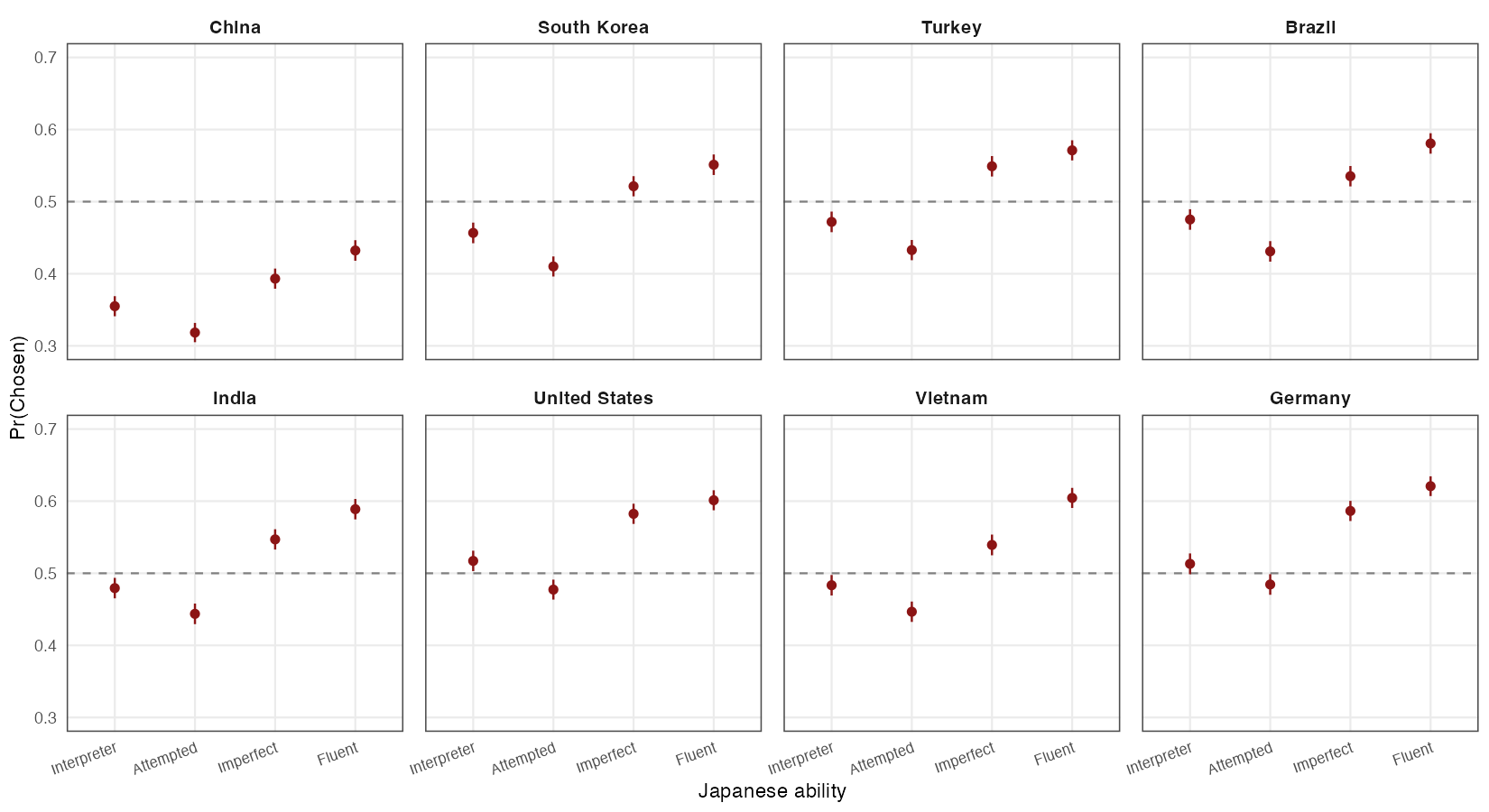
The language gradient — the rise from interpreter to fluent — is visible in every country, but China’s panel sits far below the rest at every level. Even a fluent Chinese applicant (~43%) is chosen less often than an interpreter-dependent German (~51%). The premium from fluency is also somewhat smaller for China (~8 pp) than for Vietnam, India, or Germany (~10–12 pp), meaning that demonstrating Japanese fluency does not close the gap. The origin penalty for China operates largely independently of language ability.
Combined across all three sub-waves (N ≈ 12,700 respondents).